Email : sales2@senmatech.com
 Tel : +86 18420449318



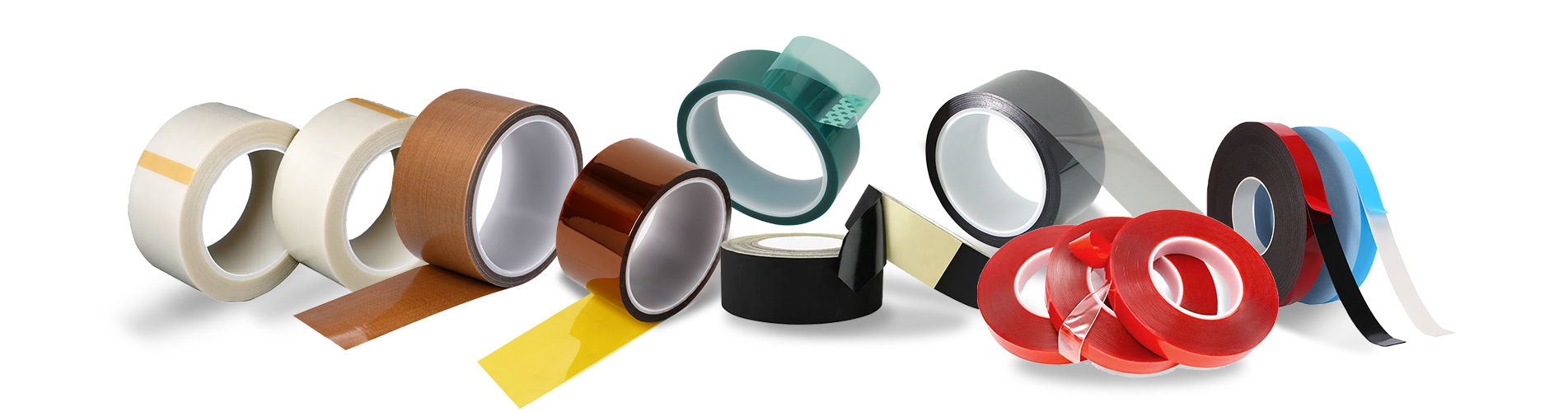
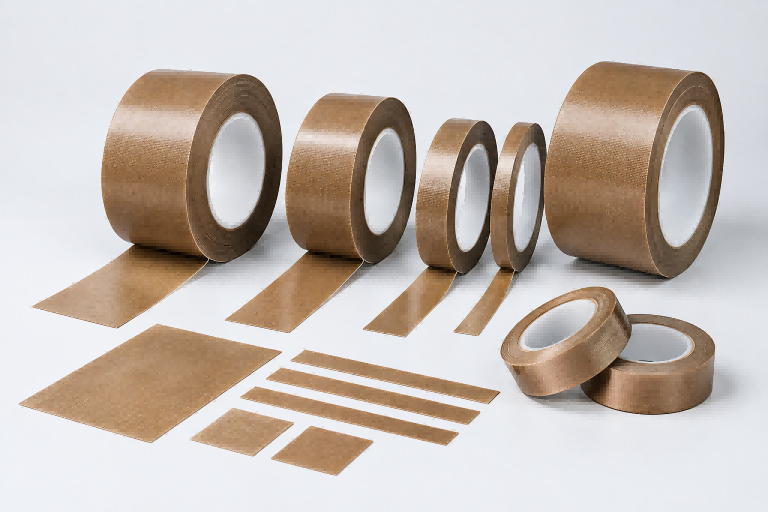
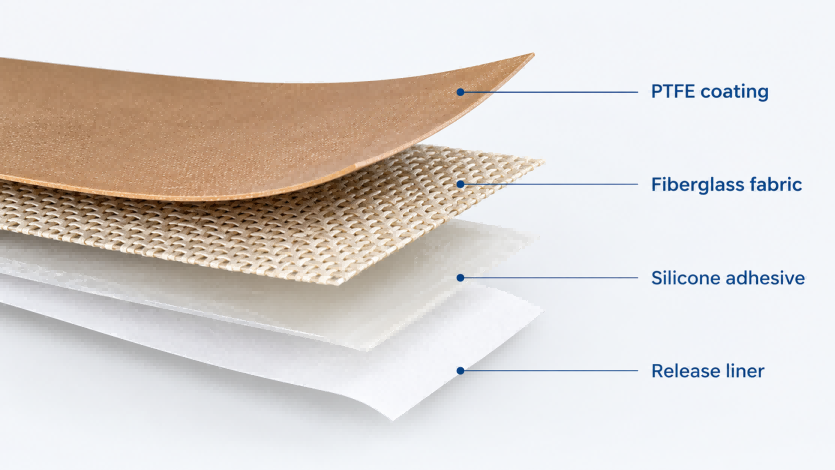
PTFE fiberglass tape is made from fiberglass fabric coated with PTFE resin, usually with a pressure-sensitive adhesive added to one side.
The two main materials provide different properties:
| Material | Main Function |
|---|---|
| PTFE coating | Non-stick surface, low friction, chemical resistance and heat resistance |
| Fiberglass fabric | Mechanical strength, dimensional stability and reinforcement |
| Silicone adhesive | Bonding to suitable surfaces under elevated temperatures |
| Release liner | Optional protection for the adhesive during storage and application |
This construction makes PTFE fiberglass adhesive tape different from ordinary PTFE film tape.
The fiberglass reinforcement provides additional mechanical stability, while the PTFE surface provides the release and non-stick characteristics required in many industrial processes.
Heat sealing equipment combines temperature, pressure and repeated movement. Tape used in these environments needs to perform under more than just elevated temperature.
| Requirement | How PTFE Fiberglass Tape Helps |
|---|---|
| High temperature | PTFE coating is designed for elevated-temperature applications |
| Non-stick surface | Helps prevent plastic films and other materials from sticking |
| Mechanical strength | Fiberglass fabric reinforces the tape |
| Low friction | PTFE surface provides low-friction characteristics |
| Chemical resistance | PTFE resists many chemicals and solvents |
| Easy release | Helps materials separate from the treated surface |
| Electrical insulation | Fiberglass/PTFE construction provides insulation properties for selected applications |
For this reason, PTFE fiberglass tape is frequently considered for heat sealing machines and other high-temperature processing equipment.
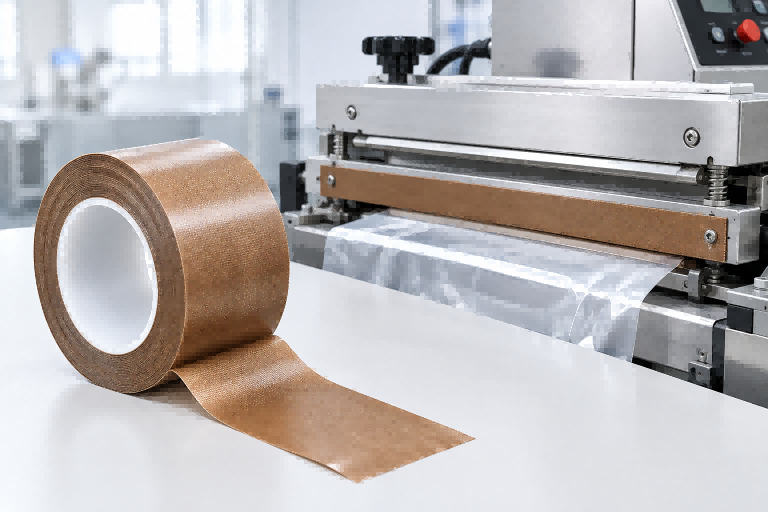
PTFE fiberglass tape can be applied to selected sealing bars and sealing components where a non-stick, heat-resistant surface is required.
Typical applications include:
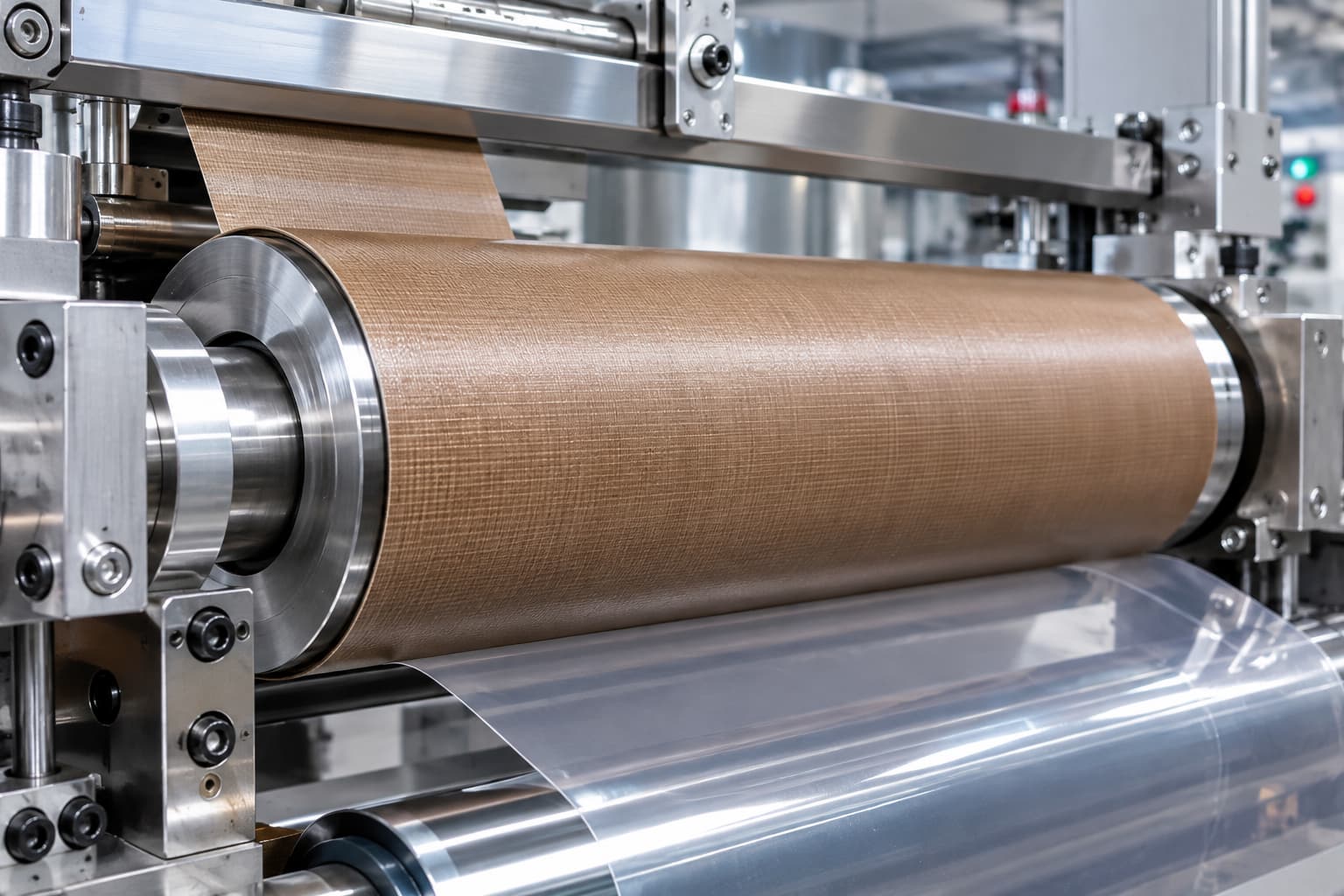
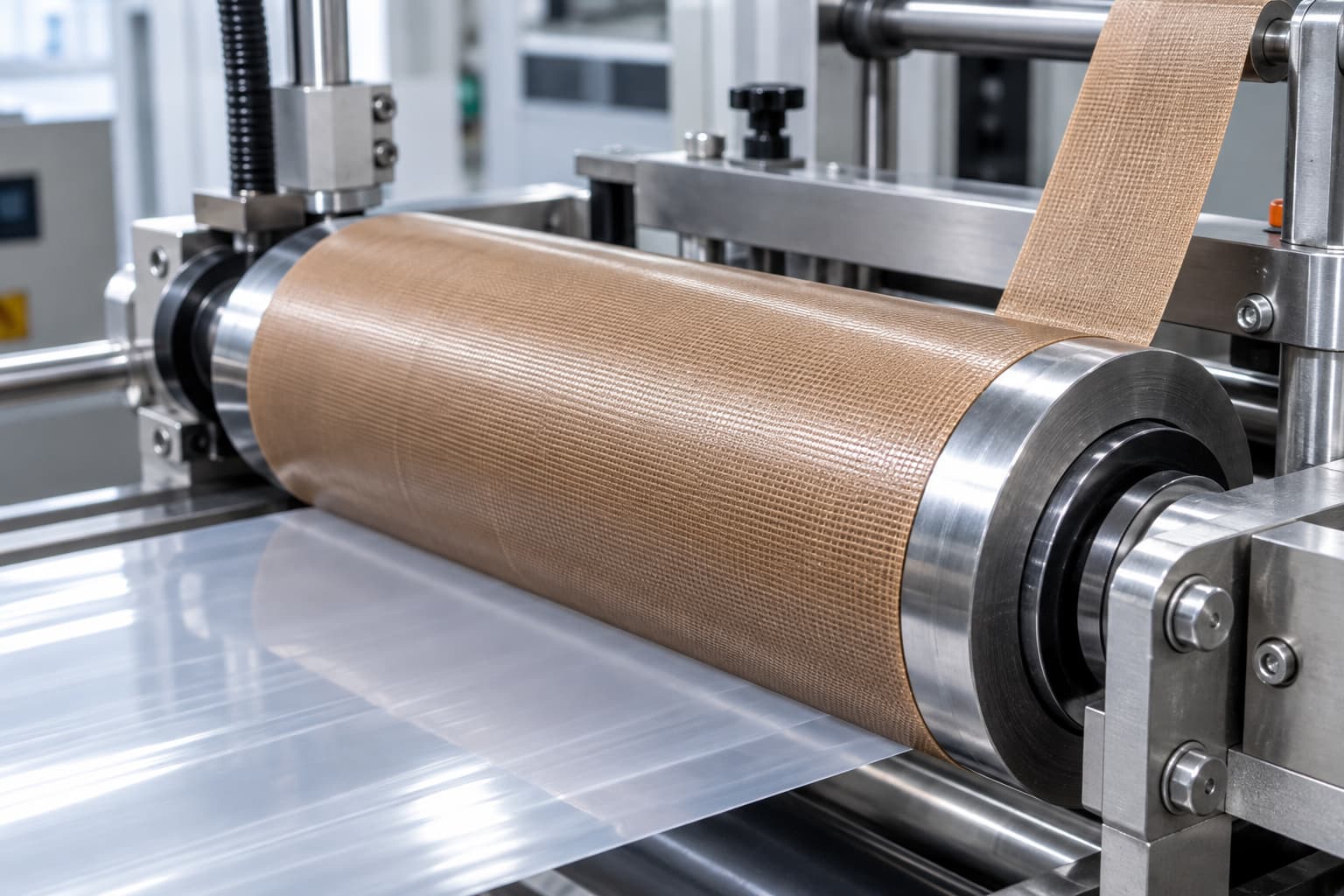
Packaging machines often expose tape to heat, pressure and continuous movement.
PTFE fiberglass tape can be used on selected:
The PTFE surface can provide a low-friction and non-stick surface for rollers used in industrial processing.
Typical applications include:
PTFE fiberglass tape can also be used as a protective or release surface on selected heating plates and processing equipment.
Its non-stick surface helps reduce material buildup and makes release easier.
This is where many industrial buyers focus only on temperature. In practice, several parameters need to be evaluated together.
| Selection Factor | What to Check | Why It Matters |
|---|---|---|
| Temperature | Normal and maximum operating temperature | Determines whether the tape construction is suitable |
| Thickness | Required tape thickness | Affects clearance, durability and mechanical support |
| Width | Required covering width | Should match the equipment or sealing area |
| Length | Required roll length | Affects replacement frequency and installation |
| Adhesive | Silicone or other suitable adhesive | Determines bonding performance |
| Substrate | Metal, plastic, coated surface, etc. | Adhesion varies with substrate |
| Surface condition | Clean, dry and contaminant-free | Poor preparation can reduce adhesion |
| Application | Sealing, roller, release, insulation, etc. | Determines the most suitable construction |
A common mistake is to ask:
“What is the maximum temperature of the tape?”
The more useful question is:
“What temperature will the complete tape construction experience during actual operation?”
For example, the PTFE coating and adhesive may have different performance limits.
| Temperature Information | Why It Should Be Considered |
|---|---|
| Normal operating temperature | Represents everyday service |
| Maximum temperature | Shows the highest exposure |
| Exposure duration | Continuous exposure differs from short-term exposure |
| Direct heating | Direct contact can create higher local temperatures |
| Heating cycles | Repeated heating and cooling can affect service life |
For the SENMA PTFE fiberglass tape described on the product page, the current specification indicates approximately -70°C to 260°C, depending on application conditions.
Thicker tape is not automatically better.
| Situation | Possible Direction |
|---|---|
| Limited clearance | Consider a thinner construction |
| Need for additional mechanical support | Consider a thicker construction |
| Smooth, precise surface required | Avoid unnecessary thickness |
| Repeated mechanical contact | Evaluate thicker/reinforced constructions |
| Irregular surface | Consider the actual surface condition before selecting thickness |
The final thickness should be based on the equipment design rather than simply choosing the thickest available tape.
The adhesive layer determines how the tape bonds to the application surface.
For high-temperature PTFE fiberglass adhesive tape, silicone adhesive is commonly used because it can maintain useful adhesion under elevated-temperature conditions.
However, adhesive selection should consider more than temperature.
| Adhesive Consideration | Questions to Ask |
|---|---|
| Temperature | What temperature will the adhesive experience? |
| Substrate | What surface will the tape bond to? |
| Adhesion | How strong does the bond need to be? |
| Removal | Does the tape need to be removed periodically? |
| Residue | Is clean removal important? |
| Service time | Temporary masking or long-term installation? |
These products are related but have different constructions.
| Feature | PTFE Fiberglass Tape | PTFE Film Tape |
|---|---|---|
| Base material | Fiberglass fabric | PTFE film |
| PTFE surface | Yes | Yes |
| Fiberglass reinforcement | Yes | No |
| Mechanical strength | High | Application dependent |
| Dimensional stability | Excellent | Good |
| Non-stick performance | Excellent | Excellent |
| Heat sealing | Common application | Application dependent |
| Industrial rollers | Common application | Application dependent |
| Release applications | Excellent | Excellent |
If the application requires both non-stick performance and mechanical reinforcement, PTFE fiberglass tape is worth considering.
Both materials are used in high-temperature applications, but their typical applications are different.
| Application Requirement | PTFE Fiberglass Tape | Polyimide Tape |
|---|---|---|
| Non-stick surface | Excellent | Limited |
| Heat sealing | Common | Application dependent |
| Release applications | Excellent | Limited |
| Chemical resistance | Excellent | Good |
| Electrical insulation | Good | Excellent |
| PCB masking | Less common | Common |
| Industrial rollers | Common | Less common |
| Fiberglass reinforcement | Yes | No |
The choice should therefore be based on the application requirement, rather than temperature rating alone.
For example, PTFE fiberglass tape may be considered for a non-stick heat-sealing surface, while polyimide tape is widely used for PCB masking and electrical insulation.
This section is particularly suitable for a table format on the website.
| Common Mistake | Why It Can Cause Problems |
|---|---|
| Mistake 1: Looking only at the temperature rating | The adhesive and complete tape construction also need to match the application. |
| Mistake 2: Assuming thicker tape is always better | Excessive thickness can create clearance or installation problems. |
| Mistake 3: Ignoring the adhesive | PTFE may tolerate high temperatures while the adhesive has different limitations. |
| Mistake 4: Choosing the wrong width | Incorrect width can leave areas unprotected or make installation difficult. |
| Mistake 5: Ignoring the substrate | Adhesion depends partly on the surface being bonded. |
| Mistake 6: Applying tape to a contaminated surface | Oil, dust and residue can reduce adhesion and cause edge lifting. |
| Mistake 7: Selecting tape without considering the actual application | Heat sealing, rollers and electrical insulation have different performance requirements. |
Yes. Industrial customers often require dimensions or constructions different from standard tape sizes.
SENMA can discuss customization such as:
| Custom Option | Examples |
|---|---|
| Width | Narrow slit rolls / wide rolls |
| Length | Custom roll length |
| Thickness | Different tape constructions |
| Core | Custom core diameter |
| Adhesive | Different adhesive configurations |
| Release liner | With or without liner |
| Shape | Die-cut parts |
| Packaging | Customized packaging |
| OEM/ODM | Customer drawings or specifications |
For OEM projects, customers can provide a drawing, sample or technical specification for evaluation.
If you are sourcing PTFE fiberglass tape for industrial equipment, the following information is helpful:
| Information | Example |
|---|---|
| Application | Heat sealing machine |
| Temperature | 200–250°C |
| Thickness | 0.13 mm |
| Width | 25 mm |
| Length | 10 m / roll |
| Substrate | Stainless steel |
| Quantity | 1,000 rolls |
| Special requirement | Low residue / custom core / die cut |
Providing these details allows the supplier to evaluate the tape construction more accurately.
Contact us



 IPv6 network supported